Lateral Hip Pain Treatment in Melbourne
Persistent pain on the outside of your hip can make walking, climbing stairs, exercising, sleeping and even lying on your side uncomfortable.
One of the most common causes is gluteal tendinopathy, often referred to clinically as Greater Trochanteric Pain Syndrome (GTPS).
At Vitality Chiropractic Australia, we take a comprehensive approach to lateral hip pain. Rather than simply treating the painful area, we look at the factors that may be contributing to excessive load or irritation around the gluteal tendons, including hip strength, movement patterns, training loads, spinal and pelvic mechanics and everyday activities.
Our goal is to help you understand why your hip is painful, reduce unnecessary irritation and progressively rebuild your capacity so you can return to the activities you enjoy.
What Is Gluteal Tendinopathy?
Gluteal tendinopathy is a condition involving the tendons of the gluteus medius and gluteus minimus muscles, which attach around the outside of the hip. These tendons play an important role in:
- Stabilising the pelvis during walking and running
- Controlling the position of the hip
- Supporting single-leg activities
- Producing hip abduction
- Controlling the movement of the thigh during everyday activities and exercise
When the capacity of these tendons is exceeded by the loads placed upon them, they can become painful and sensitive. Gluteal tendinopathy is one of the most common causes of lateral hip pain. The term Greater Trochanteric Pain Syndrome (GTPS) is often used because lateral hip pain can involve more than the gluteal tendons alone, including irritation of tissues around the greater trochanter.
Importantly, despite the common use of the term “trochanteric bursitis”, persistent lateral hip pain is frequently associated with gluteal tendon pathology rather than isolated inflammation of a bursa.
What Does Gluteal Tendinopathy Feel Like?
Gluteal tendinopathy typically causes pain over the outside of the hip, around or just behind the bony prominence known as the greater trochanter.
Common symptoms include:
Pain on the outside of the hip
You may experience:
- Aching
- Sharp or catching pain
- Tenderness over the side of the hip
- Burning or discomfort
- Pain that increases with certain movements or positions
Pain lying on the affected side
One of the classic features of GTPS is discomfort when lying directly on the affected hip. Some people also experience symptoms when lying on the opposite side because the upper leg may fall across the body and place compression through the lateral hip.
Pain walking or standing
Symptoms may increase with:
- Longer walks
- Standing for prolonged periods
- Walking uphill
- Walking downstairs
- Carrying loads
- Prolonged single-leg standing
Pain with stairs
Climbing stairs requires significant contribution from the hip abductors and extensors and may aggravate a sensitive gluteal tendon.
Pain during running or exercise
Runners and active individuals may notice symptoms during:
- Running
- Hill running
- Lunging
- Squatting
- Step-ups
- Lateral movements
- Jumping
- Change-of-direction activities
Pain after activity
Gluteal tendinopathy can sometimes feel relatively manageable during an activity but become more painful later that day or the following morning. This delayed response is important when determining whether the current training or activity load is appropriate.
What Causes Gluteal Tendinopathy?
Gluteal tendinopathy usually develops when the tendon is exposed to more load than it can currently tolerate. This does not necessarily mean that one particular movement has “damaged” the tendon. Instead, symptoms can develop when the balance between tendon capacity and tendon loading changes.
Potential contributing factors include:
Sudden increases in activity
A rapid increase in:
- Walking
- Running
- Hill work
- Gym training
- Hiking
- Sport
- Stair climbing
can increase the load placed through the gluteal tendons.
Reduced hip strength or capacity
If the gluteal muscles and surrounding hip musculature are not adequately conditioned for the demands being placed upon them, tendon load may become excessive.
Repetitive compression
Certain positions can increase compression around the lateral hip.
Examples include:
- Sitting with the legs crossed
- Standing with the hip dropped to one side
- Sleeping directly on the painful side
- Bringing the leg across the body repeatedly
- Prolonged positions involving hip adduction
Training errors
Gluteal tendinopathy can occur when training volume, intensity or frequency increases faster than the body’s capacity to adapt.
Changes in physical activity
Symptoms may appear after:
- Starting a new exercise program
- Returning to sport
- Increasing running volume
- Changing footwear or terrain
- Increasing hill training
- Beginning a new job involving prolonged standing or walking
Age-related changes
Tendons naturally undergo structural changes with age. These changes do not automatically mean that a tendon is painful or damaged, but they can alter how the tendon responds to changes in load.
Gluteal Tendinopathy vs Trochanteric Bursitis
The terms gluteal tendinopathy, trochanteric bursitis and Greater Trochanteric Pain Syndrome are sometimes used interchangeably, but they are not exactly the same thing. GTPS is a broader clinical description of pain around the greater trochanter. In many people with persistent lateral hip pain, the gluteal tendons are an important source of symptoms. This distinction matters because treatment should not simply focus on reducing inflammation.
For persistent gluteal tendinopathy, rehabilitation generally focuses on:
- Managing aggravating loads
- Improving tendon capacity
- Progressive strengthening
- Improving hip function
- Gradually returning to normal activities
Research supports education combined with targeted exercise as an effective management strategy for gluteal tendinopathy. In a randomised clinical trial, education plus exercise produced better overall improvement than corticosteroid injection or a wait-and-see approach, with benefits maintained at 52 weeks.
How Is Gluteal Tendinopathy Diagnosed?
Gluteal tendinopathy is primarily a clinical diagnosis. At Vitality Chiropractic Australia, your assessment may include an examination of:
Your symptoms
We will consider:
- Where you feel the pain
- When it started
- What aggravates it
- What relieves it
- Whether symptoms are worse at night
- Your response to exercise
- Your response to walking and other daily activities
Hip strength
We may assess the capacity of the muscles around the hip and pelvis, particularly the hip abductors.
Single-leg function
Activities such as single-leg standing, step-downs or other functional movements may help identify deficits in strength, control or load tolerance.
Movement patterns
We may assess how your:
- Hip
- Pelvis
- Lumbar spine
- Knee
- Foot and ankle
contribute to your overall movement strategy.
Lumbar spine and neurological screening
Lateral hip pain can sometimes be confused with pain referred from the lumbar spine or other structures. A comprehensive assessment helps determine whether the symptoms are most consistent with GTPS or whether another source should be investigated.
Do I Need An MRI Or Ultrasound?
Not necessarily. Imaging is not routinely required for every person with lateral hip pain. In many cases, the history and physical examination provide sufficient information to develop an appropriate management plan.
Imaging may become appropriate when:
- Symptoms are severe or atypical
- The diagnosis is uncertain
- Recovery is not progressing as expected
- Significant trauma has occurred
- A major tendon tear is suspected
- Another condition needs to be excluded
- Specialist assessment is being considered
Importantly, imaging findings do not always correlate directly with pain. A tendon may show structural changes without causing symptoms, which is why imaging should be interpreted alongside the clinical presentation.
Gluteal Tendinopathy Treatment
The goal isn’t simply to reduce pain
For persistent gluteal tendinopathy, the long-term objective is to improve the ability of the hip and gluteal tendons to tolerate normal and progressively increasing loads. Current evidence supports exercise as a first-line treatment for clinically diagnosed GTPS, particularly when combined with appropriate education and load management.
At Vitality Chiropractic Australia, treatment may involve several components.
1. Education & Load Management
Understanding your condition is an important part of recovery. You may need to temporarily modify activities that repeatedly aggravate the tendon while maintaining as much normal movement and activity as possible. This might include modifying:
- Walking distances
- Running volume
- Hill walking
- Gym exercises
- Sleeping positions
- Standing habits
- Leg-crossing
- Single-leg loading
The aim is not complete rest. Instead, we aim to find an appropriate level of loading that allows the tendon to recover while maintaining and gradually rebuilding capacity.
2. Progressive Gluteal Strengthening
Strengthening is a central component of rehabilitation. Depending on your presentation, rehabilitation may progressively target:
- Gluteus medius
- Gluteus minimus
- Gluteus maximus
- Hip rotators
- Hip extensors
- Trunk and pelvic control
Exercises may progress from relatively simple loading to more demanding:
- Isometric exercises
- Controlled strengthening
- Functional movements
- Single-leg exercises
- Resistance training
- Running and sporting activities
The exact exercises and progression should be individualised according to your current capacity and symptoms.
3. Improving Hip & Pelvic Control
The gluteal muscles have an important role in controlling the pelvis and femur during movement. Rehabilitation may therefore include exercises designed to improve control during:
- Walking
- Stairs
- Squatting
- Lunging
- Step-downs
- Single-leg movements
- Running
The objective is not to achieve a “perfect” movement pattern, but to improve the person’s ability to tolerate their required activities.
4. Manual Therapy
Hands-on treatment may sometimes be used as an adjunct to an active rehabilitation program. Depending on the individual presentation, this may include treatment directed toward:
- The lumbar spine
- Hip region
- Pelvis
- Surrounding soft tissues
Manual therapy may help reduce symptoms or improve short-term movement tolerance, allowing the person to participate more comfortably in their rehabilitation. However, hands-on treatment is generally best considered as part of a broader management strategy rather than the sole treatment for chronic tendon problems.
What Exercises Are Good for Gluteal Tendinopathy?
There is no single “best” exercise for everyone with gluteal tendinopathy. A successful rehabilitation program generally progresses from an individual’s current level of tolerance toward the demands they need to perform. Depending on the stage of rehabilitation, exercises may include:
Early-stage loading
- Gentle gluteal isometric exercises
- Controlled hip abduction
- Supported standing exercises
- Low-load hip strengthening
Intermediate strengthening
- Bridges
- Hip abduction exercises
- Sit-to-stand
- Squats
- Step-ups
- Controlled lateral strengthening
Advanced strengthening
- Single-leg squats
- Split squats
- Step-downs
- Loaded hip exercises
- Single-leg strengthening
- Dynamic movement drills
Return-to-running and sport
For active individuals, rehabilitation may eventually include:
- Running progression
- Hill exposure
- Lateral movement
- Jumping
- Change of direction
- Sport-specific loading
The appropriate progression depends on the individual’s symptoms, strength, current capacity and goals.
Should I Stretch A Gluteal Tendinopathy?
This is an important consideration. Aggressive stretching of the gluteal region is not automatically beneficial. Some traditional hip stretches place the hip into positions of adduction, which can increase compression around the lateral hip. For some people with GTPS, repeatedly pushing into these positions may aggravate symptoms. Rather than automatically prescribing more stretching, rehabilitation should consider:
What movement does this person need, and what level of loading can their tendon currently tolerate?
Mobility work can still have a role when clinically appropriate, but it should complement — rather than replace — progressive strengthening and load management.
How Long Does Gluteal Tendinopathy Take To Recover?
Recovery time varies considerably. Some people experience significant improvement within several weeks, while others with longstanding or more irritable symptoms may require a longer rehabilitation period. Factors that can influence recovery include:
- How long symptoms have been present
- Initial tendon capacity
- Current activity levels
- Training demands
- Sleep disruption
- Overall strength
- Ability to modify aggravating loads
- Consistency with rehabilitation
- Other hip, lumbar or lower-limb conditions
Importantly, improvement does not necessarily mean that all symptoms disappear immediately. A more useful measure is whether your capacity is progressively increasing.
For example:
“I can walk further.”
“I can sleep on that side for longer.”
“I can climb stairs with less pain.”
“I can train again.”
“My hip doesn’t flare up the day after exercise.”
These functional improvements are important signs that your rehabilitation is moving in the right direction.
When Should You See A Chiropractor?
Consider having your lateral hip pain assessed if:
- Pain has persisted for several weeks
- Your walking is becoming restricted
- You cannot comfortably sleep on the affected side
- Exercise repeatedly causes flare-ups
- Stairs are painful
- You are unable to return to your normal training
- You are unsure whether the pain is coming from your hip or lower back
- Symptoms continue despite modifying your activity
Early assessment can help identify the likely source of your symptoms and provide a structured plan for returning to normal activity.
When Should You Seek Further Medical Assessment?
Most lateral hip pain is not an emergency, but some symptoms warrant further investigation.
Seek prompt medical assessment if you experience:
- Significant trauma or inability to bear weight
- Severe or rapidly worsening pain
- Fever or systemic illness
- Unexplained significant weight loss
- Persistent night pain that is not position-dependent
- Significant neurological symptoms
- Progressive weakness
- New bowel or bladder changes
- Numbness around the groin or saddle region
These symptoms may indicate that something other than uncomplicated GTPS requires investigation.
Your Vitality Recovery Approach
At Vitality Chiropractic Australia, we don’t believe that recovery from gluteal tendinopathy should simply involve repeatedly treating the painful spot. Our approach is based around understanding the individual’s presentation and progressively restoring capacity.
Assess
We identify the likely source of your lateral hip pain and assess the factors that may be contributing to it.
Calm
We help you identify and modify excessive or unnecessary aggravating loads.
Build
We progressively strengthen the muscles and tissues responsible for controlling and loading the hip.
Restore
We gradually reintroduce the activities that matter to you.
Maintain
The final goal is not simply to get the pain down. It is to build enough capacity that you can confidently manage your normal activities, exercise and lifestyle.
The Vitality Gluteal Tendinopathy Recovery Blueprint
A structured roadmap for rebuilding hip capacity
If your gluteal tendinopathy has become persistent, recurring or difficult to manage, a structured rehabilitation program can help provide greater clarity around the recovery process. The Vitality Gluteal Tendinopathy Recovery Blueprint is designed to provide a structured, education-based roadmap for progressing from symptom management toward restored strength, capacity and function.
The Blueprint covers key areas such as:
- Understanding gluteal tendinopathy
- Load management
- Symptom monitoring
- Recovery principles
- Progressive strengthening
- Functional capacity
- Return to exercise
- Long-term maintenance
Rather than relying on passive treatment alone, the Blueprint focuses on helping you understand how to progressively rebuild your capacity.
Explore the Vitality Gluteal Tendinopathy Recovery Blueprint →
The Recovery Blueprint provides general educational and exercise guidance and does not replace an individual clinical assessment.
Recommended Recovery Tools
The right equipment can make home rehabilitation easier and more consistent. Depending on your individual rehabilitation requirements, useful tools may include:
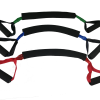
Resistance Bands
Resistance bands can provide progressive loading for gluteal strengthening and hip control exercises.
Recommended: Fortress Premium Power Bands
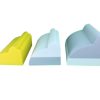
Foam Roller
A foam roller may be useful as part of a broader mobility and exercise routine, although it should not be relied upon as the primary treatment for gluteal tendinopathy.
Recommended: Fortress Medium Round Foam Roller
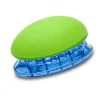
Trigger Point Balls
A trigger point or spikey massage ball may be useful for reducing associated gluteal trigger points or tight muscle fibres.
Recommended: Fortress Rubber Trigger Point Ball
Explore our wider range of Recovery & Rehabilitation Products →
Book A Gluteal Tendinopathy Assessment In Melbourne
If pain on the outside of your hip is affecting your walking, sleep, exercise or everyday activities, the first step is determining why the hip is painful and what level of loading it can currently tolerate.
At Vitality Chiropractic Australia, we can assess your hip, lumbar spine and surrounding movement patterns and help develop an individualised plan for improving your symptoms and rebuilding your capacity.
Located in Mill Park, Melbourne.
Clinical Disclaimer
The information provided on this page is intended for general educational purposes and should not be considered a diagnosis or substitute for individual healthcare advice.
Lateral hip pain can have several potential causes. An appropriate clinical assessment is required to determine the most likely source of symptoms and the most appropriate management approach.
If your symptoms are severe, worsening, associated with significant trauma, neurological changes or other concerning symptoms, further medical assessment may be required.
Related Vitality Resources
For patients with lateral hip pain, the following Vitality resources may also be relevant:
- Hip Pain
- Bursitis
- Sacroiliac Joint Pain
- Lower Back Pain
- Lumbar Radiculopathy
- Sciatica
- Piriformis Syndrome
- Hamstring Strain / Tendinopathy
- Calf Strain
- Achilles Tendinopathy
- Plantar Fasciitis
Gluteal Tendon Pain Frequently Asked Questions
Can gluteal tendinopathy heal?
Yes. Tendons can adapt to appropriately managed loading and progressive strengthening.
Recovery can take time, particularly when symptoms have been present for a long period.
Can I run with gluteal tendinopathy?
Some people can continue running with appropriate modifications, while others may need a temporary reduction in running volume or intensity.
A progressive return to running should be based on your current capacity and your response to loading.
Is shockwave therapy useful?
Shockwave therapy may be considered as an adjunct for some people with persistent GTPS, but the evidence remains mixed. A 2024 systematic review found moderate-quality evidence did not demonstrate statistically significant improvements compared with controls, while other evidence suggests potential clinical benefit.
It should therefore be considered as part of an overall management strategy rather than a replacement for progressive rehabilitation.