Hamstring Pain Treatment & Rehabilitation In Melbourne
Hamstring pain can make walking, running, bending, sitting, training and returning to sport frustrating. Whether your symptoms developed suddenly during sprinting or gradually over time, an appropriate diagnosis and rehabilitation plan can help you understand what is contributing to your symptoms and progressively rebuild strength and confidence.
At Vitality Chiropractic Australia, we assess and manage a range of hamstring-related conditions, including acute hamstring strains, recurrent hamstring injuries and hamstring tendinopathy. Management focuses on identifying relevant contributing factors, improving movement and physical capacity, and developing a progressive rehabilitation strategy appropriate to your individual goals.
Our clinic supports patients from Mill Park, South Morang, Epping, Bundoora, Lalor, Thomastown, Plenty, Mernda and Melbourne’s northern suburbs.
What Is Hamstring Pain?
The hamstrings are a group of muscles located at the back of the thigh. They play an important role in:
- Walking and running
- Sprinting
- Jumping
- Bending and hip movement
- Knee movement
- Decelerating the leg during running
- Athletic performance
The hamstring muscle group includes:
- Biceps femoris
- Semitendinosus
- Semimembranosus
Pain in the hamstring region can develop from several different structures and conditions. Two of the more common presentations are hamstring strains and hamstring tendinopathy. Although both conditions can cause pain in the posterior thigh, they often develop differently and may require different rehabilitation strategies.
What Is A Hamstring Strain?
A hamstring strain occurs when one or more hamstring muscle fibres are injured. This commonly occurs when the hamstrings are exposed to a force or movement demand that exceeds their current capacity. Hamstring strains are particularly common during activities involving:
- Sprinting
- Accelerating
- Rapid deceleration
- Kicking
- Jumping
- Sudden changes of direction
- Slipping or overstretching
- High-speed sporting movements
Symptoms may develop suddenly and can include a sharp pain or pulling sensation at the back of the thigh. Depending on the severity of the injury, symptoms may range from mild discomfort to significant pain, bruising and difficulty walking.
What Is Hamstring Tendinopathy?
Hamstring tendinopathy is generally a tendon-related condition involving the hamstring tendon. A common presentation is proximal hamstring tendinopathy, where symptoms are experienced near the upper hamstring attachment close to the sitting bone, known anatomically as the ischial tuberosity. Unlike an acute strain, tendinopathy often develops gradually.
Common aggravating activities can include:
- Running
- Sprinting
- Hills
- Lunges
- Deadlifts
- Forward bending
- Prolonged sitting
- Stretching the hamstrings
- High-volume training
Tendon pain is often related to the relationship between the demands placed on the tendon and its current capacity to tolerate those demands. For this reason, successful rehabilitation usually involves more than simply stretching the hamstrings or resting indefinitely.
Hamstring Strain vs Hamstring Tendinopathy
| Hamstring Strain | Hamstring Tendinopathy |
|---|---|
| Often develops suddenly | Often develops gradually |
| May occur during sprinting or explosive movement | Often develops with repetitive loading |
| Can involve an acute tearing sensation | Usually develops as localised tendon pain |
| Bruising may occur | Bruising is generally less common |
| Rehabilitation focuses on tissue recovery and progressive return to loading | Rehabilitation focuses heavily on progressive tendon capacity |
| May involve muscle injury | Primarily involves the tendon |
Some patients may also experience a combination of muscle and tendon-related symptoms. An appropriate assessment is important because treatment should reflect the likely source of symptoms and the individual’s activity goals.
Common Symptoms Of A Hamstring Injury
Symptoms can vary depending on the type and severity of the condition.
Hamstring strain symptoms may include:
- Sudden pain at the back of the thigh
- A popping or tearing sensation
- Pain during walking
- Pain when bending the knee
- Pain when extending the leg
- Weakness
- Stiffness
- Bruising
- Swelling
- Difficulty running or sprinting
Hamstring tendinopathy symptoms may include:
- Deep pain high in the back of the thigh
- Pain near the sitting bone
- Pain during prolonged sitting
- Pain during running
- Pain during acceleration
- Pain during uphill running
- Pain with bending or hinging
- Symptoms during or after exercise
- Morning stiffness
- Recurrent symptoms when training load increases
What Causes Hamstring Strains?
Hamstring injuries are usually multifactorial.
Potential contributing factors can include:
- Rapid increases in training load
- Previous hamstring injury
- Reduced hamstring strength
- Reduced exposure to high-speed running
- Fatigue
- Inadequate recovery
- Poor tolerance to sprinting demands
- Reduced eccentric strength
- Changes in training volume
- Returning to sport too quickly
A previous hamstring injury may increase the likelihood of future injury, particularly if the athlete returns to high-speed activity before restoring sufficient strength and running capacity.
What Causes Hamstring Tendinopathy?
Hamstring tendinopathy can develop when the cumulative demands placed on the tendon exceed its current capacity.
This may occur following:
- Sudden increases in running volume
- Increased hill running
- Increased sprinting
- New gym programs
- Increased deadlifting or hinging volume
- Increased stretching
- Changes in training intensity
- Reduced recovery
- Repeated compression or loading of the proximal hamstring tendon
The goal is not necessarily to eliminate all activity.
Instead, rehabilitation often focuses on identifying which activities exceed the tendon’s current tolerance and progressively rebuilding capacity.
How Long Does A Hamstring Injury Take To Heal?
Recovery time varies significantly. A mild hamstring strain may improve relatively quickly, while more significant muscle injuries can require a longer rehabilitation period. Hamstring tendinopathy can also require a more gradual recovery process, particularly when symptoms have been present for an extended period.
Recovery depends on factors including:
- Severity of injury
- Duration of symptoms
- Previous injuries
- Current strength and capacity
- Sport or activity demands
- Training load
- Rehabilitation consistency
- Sleep and recovery
- The presence of other contributing conditions
Rather than focusing only on a fixed number of weeks, rehabilitation should focus on achieving appropriate functional milestones.
Hamstring Strain & Tendinopathy Assessment
A thorough assessment can help determine whether symptoms are more consistent with:
- Hamstring muscle injury
- Hamstring tendon irritation
- Proximal hamstring tendinopathy
- Referred pain from the lumbar spine
- Neural involvement
- Hip-related conditions
- Other causes of posterior thigh pain
Assessment may include consideration of:
- Your injury history
- How symptoms developed
- Sporting and training history
- Current training load
- Pain location
- Functional limitations
- Walking and running tolerance
- Hip movement
- Hamstring strength
- Trunk and pelvic control
- Neurological symptoms where relevant
Imaging is not required for every hamstring injury. However, medical imaging or referral may sometimes be appropriate when there is concern about a significant muscle or tendon injury, tendon avulsion, severe weakness or another underlying condition.
Hamstring Strain Treatment
Treatment should reflect the stage and severity of the injury. In the early stages, the priority may include:
- Protecting the injured tissue from excessive aggravation
- Maintaining comfortable movement
- Managing symptoms
- Gradually restoring normal function
As recovery progresses, rehabilitation typically becomes increasingly focused on:
- Restoring movement
- Building hamstring strength
- Improving hip and trunk capacity
- Developing eccentric strength
- Improving tolerance to longer muscle lengths
- Reintroducing running
- Reintroducing high-speed running
- Preparing for sport-specific demands
The goal is not simply to become pain-free at rest.
For active individuals, the hamstring must eventually tolerate the specific demands of their activity.
Hamstring Tendinopathy Treatment
Hamstring tendinopathy rehabilitation often focuses on progressive loading rather than complete rest.
Depending on the individual presentation, rehabilitation may include:
- Temporary modification of aggravating activities
- Progressive hamstring strengthening
- Isometric loading where appropriate
- Heavy slow resistance training where appropriate
- Hip and lower limb strengthening
- Progressive running exposure
- Management of training volume
- Gradual return to higher-speed activity
Some people with tendon-related pain find that aggressive stretching aggravates their symptoms, particularly during the earlier stages of rehabilitation. The appropriate amount of movement and loading should be individualised.
The Role of Strength In Hamstring Rehabilitation
A hamstring must tolerate substantial forces during running and sprinting. Rehabilitation therefore commonly progresses beyond low-level exercises. Depending on the individual and stage of recovery, a program may progressively develop:
- Hamstring strength
- Eccentric capacity
- Hip strength
- Single-leg strength
- Trunk control
- Running tolerance
- Acceleration capacity
- Sprint tolerance
The exact exercises and progression should depend on the individual’s current capacity and goals.
The Vitality Hamstring Strain & Tendinopathy Recovery Pyramid
Our rehabilitation philosophy is based around building recovery from the foundations upward.
1. Understand Your Condition
Learn the difference between muscle and tendon-related pain, understand your symptoms and identify factors influencing recovery.
2. Restore Movement & Confidence
Reintroduce comfortable movement and reduce unnecessary fear of loading the hamstring.
3. Build Strength & Capacity
Progressively improve hamstring, hip and lower-limb strength.
4. Develop Functional Performance
Build tolerance for running, acceleration, sport and higher-demand activities.
5. Maintain Long-Term Resilience
Develop a sustainable training approach designed to support ongoing hamstring health and reduce unnecessary spikes in training demand.
Vitality Hamstring Strain & Tendinopathy Recovery Blueprint
If you want a more structured rehabilitation roadmap, the Vitality Hamstring Strain & Tendinopathy Recovery Blueprint provides a comprehensive patient-focused recovery framework.
The Blueprint is designed to help you better understand:
- Hamstring strains and tendon-related pain
- Recovery expectations
- Load management
- Symptom monitoring
- Progressive rehabilitation principles
- Strength and capacity development
- Return-to-running considerations
- Long-term hamstring resilience
The full Blueprint provides a structured progression and practical implementation framework while protecting the detailed proprietary programming, progression methodology and prescription logic within the paid program.
Explore the Vitality Hamstring Strain & Tendinopathy Recovery Blueprint →
Vitality Recommended Products For Hamstring Recovery
The right recovery tools can support your rehabilitation, although no product replaces an appropriately progressed exercise and loading program.
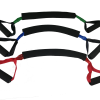
Fortress Premium Power Bands
Resistance bands can be used as part of progressive hamstring, hip and lower-limb strengthening.
Potential uses may include:
- Hamstring strengthening
- Hip extension exercises
- Hip stability exercises
- Trunk strengthening
- Warm-up and activation exercises
Fortress Medium Round Foam Roller
A foam roller can be used as part of a general mobility and recovery routine.
It may be useful for:
- General lower-limb mobility work
- Self-management of surrounding muscle tightness
- Warm-up routines
- Recovery between training sessions
Foam rolling should not be used as a substitute for progressively improving hamstring strength and capacity.
Rubber Trigger Point Ball
A trigger-point ball may be useful for targeted self-management of surrounding muscles, including areas such as the gluteal muscles.
It should be used according to individual comfort and should not be relied upon as the primary treatment for a hamstring injury.
Exercises For Hamstring Pain
The best exercise depends on the type and stage of injury.
A rehabilitation plan may include exercises designed to improve:
- Hamstring strength
- Hip strength
- Gluteal strength
- Single-leg control
- Trunk capacity
- Eccentric strength
- Running tolerance
Generic exercises can be useful, but a complete rehabilitation plan should consider whether you are recovering from an acute strain, persistent tendon-related symptoms or another source of posterior thigh pain.
When Should You Seek Professional Assessment?
You should consider professional assessment if you experience:
- A sudden severe hamstring injury
- Significant bruising or swelling
- A popping sensation followed by substantial weakness
- Difficulty walking
- Persistent symptoms
- Recurrent hamstring injuries
- Symptoms that worsen despite reducing aggravating activity
- Numbness or tingling
- Pain extending below the knee
- Significant lower back pain associated with leg symptoms
These symptoms may require further assessment to determine whether another structure is contributing to the pain.
Hamstring Pain Treatment In Mill Park
If hamstring pain is affecting your ability to exercise, work, walk, run or participate in sport, an assessment can help identify the likely contributing factors and determine an appropriate management strategy.
At Vitality Chiropractic Australia, our approach focuses on helping you understand your symptoms and progressively build the physical capacity required for your individual goals.
Whether you are recovering from an acute hamstring strain, persistent proximal hamstring tendinopathy or recurrent hamstring problems, your rehabilitation should be tailored to your presentation and activity demands.
Book an appointment with Vitality Chiropractic Australia in Mill Park and take the next step towards understanding and managing your hamstring pain.
Hamstring Injury Frequently Asked Questions
How do I know if I have a hamstring strain or tendinopathy?
The way symptoms developed can provide useful information.
A sudden injury during sprinting or explosive movement may be more consistent with a muscle strain, while gradually developing pain near the upper hamstring attachment may be more consistent with tendinopathy.
However, other conditions can produce similar symptoms, so an assessment may be helpful.
Should I rest completely?
Complete rest is not always necessary or beneficial.
The appropriate approach depends on the severity and stage of the condition. Many rehabilitation programs aim to maintain comfortable activity while temporarily reducing demands that significantly aggravate symptoms.
Can I keep running with hamstring tendinopathy?
Some people can continue modified running, while others may need a temporary reduction in running load.
The appropriate amount depends on symptom severity, recovery and how the tendon responds to activity.
How can I reduce the risk of another hamstring injury?
Long-term risk reduction may involve:
- Progressive strength training
- Appropriate exposure to sprinting demands
- Avoiding sudden spikes in training volume
- Maintaining physical conditioning
- Allowing appropriate recovery
- Addressing previous injury deficits where relevant