Iliotibial Band Syndrome (ITB Syndrome): Causes, Symptoms & Treatment

Pain on the outside of your knee when running, walking downhill or exercising? Iliotibial Band Syndrome (ITB Syndrome), also known as iliotibial band-related lateral knee pain, is a common overuse-related condition affecting runners and active people.

At Vitality Chiropractic Australia, our approach focuses on identifying the likely source of your lateral knee pain, understanding the training and movement factors contributing to your symptoms, and progressively rebuilding the capacity required for running, exercise and everyday activity.

Rather than simply chasing pain or trying to “release a tight IT band”, effective rehabilitation should address the relationship between current load and current capacity.

Located in Mill Park, Melbourne, Vitality Chiropractic Australia provides assessment and rehabilitation for running and sports-related injuries.

What Is Iliotibial Band Syndrome?

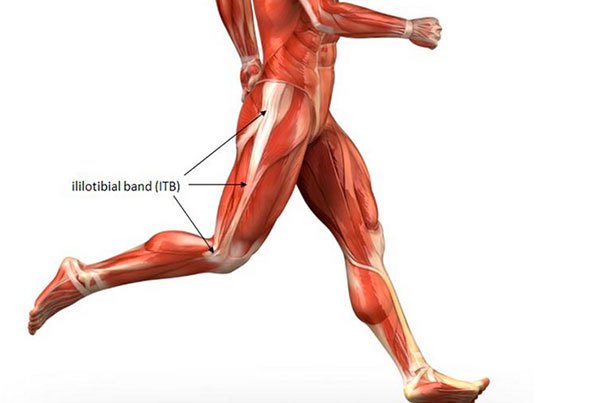
The iliotibial band, often shortened to the IT band or ITB, is a strong band of connective tissue that runs along the outside of the thigh from the hip region toward the outside of the knee. Iliotibial Band Syndrome is generally associated with pain around the outer (lateral) aspect of the knee, particularly during repetitive activities such as running. Historically, ITB Syndrome was commonly described as a simple “friction syndrome”, where the IT band was thought to repeatedly rub over the outside of the femur. While the term iliotibial band friction syndrome is still widely used, modern understanding of lateral knee pain is more nuanced.

ITB-related symptoms are better considered in the context of:

  • Repetitive mechanical loading
  • Training volume and intensity
  • Recent changes in activity
  • Individual movement patterns
  • Lower-limb strength and capacity
  • Recovery between training sessions
  • The ability of the tissues around the lateral knee to tolerate current demands

In practical terms, ITB Syndrome often develops when the demands placed on the lower limb increase beyond the person’s current capacity to tolerate them.

Symptoms Of Iliotibial Band Syndrome

ITB Syndrome can present differently between individuals, but symptoms commonly occur on the outside of the knee.

Common symptoms include:

  • Sharp or aching pain on the outside of the knee
  • Burning or irritation around the lateral knee
  • Pain that develops after running for a particular distance
  • Symptoms that become worse as activity continues
  • Pain when running downhill
  • Pain when walking downhill or downstairs
  • Tenderness around the outside of the knee
  • Symptoms that return when running volume increases
  • Reduced confidence with running or exercise

Some people can identify a very specific point during a run where symptoms begin. For example, a runner may feel completely comfortable for the first few kilometres before lateral knee pain progressively develops once a particular level of fatigue or loading has been reached.

What Causes Iliotibial Band Syndrome?

ITB Syndrome is rarely caused by one single problem. In many cases, symptoms develop because of a combination of factors.

1. Sudden Increases in Running or Training Load

One of the most important contributors is a rapid increase in training demand.

This may include:

  • Increasing weekly running distance
  • Adding additional running days
  • Increasing running speed
  • Introducing interval training
  • Increasing hill running
  • Returning to running after time away
  • Increasing gym training alongside running
  • Preparing for a race without sufficient progression

The body can adapt remarkably well to training, but adaptation requires sufficient time. A sudden increase in demand may temporarily exceed tissue capacity and trigger symptoms.

2. Changes In Training Intensity

Distance is not the only important variable. A runner can maintain the same weekly kilometres while significantly increasing overall training stress through:

  • Faster running
  • Sprint intervals
  • Hills
  • Trail running
  • Increased frequency
  • Reduced recovery between sessions

When reviewing ITB-related symptoms, it is important to look at the entire training picture, not simply weekly distance.

3. Reduced Lower-Limb Capacity

The muscles and tissues surrounding the hip, pelvis, knee and ankle work together to manage force during running. Depending on the individual, rehabilitation may assess capacity in areas including:

  • Hip abductors
  • Gluteal muscles
  • Quadriceps
  • Hamstrings
  • Calf muscles
  • Foot and ankle musculature
  • Trunk and pelvic control

This does not mean that every person with ITB Syndrome simply has “weak glutes”. That explanation is often too simplistic. Instead, the question is whether your current lower-limb capacity is appropriate for the demands you are placing upon it.

4. Running Biomechanics & Movement Patterns

Movement patterns may influence how force is distributed through the lower limb. Depending on the individual, assessment may consider:

  • Running mechanics
  • Pelvic control
  • Hip and knee movement
  • Cadence
  • Stride characteristics
  • Fatigue-related movement changes
  • Foot and ankle mechanics

Not every biomechanical difference requires correction. The goal is not to make every runner look identical. Instead, movement assessment may help identify whether a particular pattern is contributing to excessive or repeated loading beyond your current capacity.

5. Recovery & Overall Training Stress

Recovery is an often-overlooked component of injury management. Factors that may influence your ability to tolerate training include:

  • Poor sleep
  • High overall training volume
  • Insufficient recovery days
  • Stress
  • Rapid changes in exercise routine
  • Returning from another injury
  • Combining high-volume running and strength training

Your rehabilitation program should consider your total physical load, not simply the exercises you perform for your knee.

IT Band Syndrome In Runners

ITB Syndrome is particularly common in runners because running involves thousands of repeated loading cycles. A runner may initially tolerate a particular distance or pace without difficulty. However, when fatigue accumulates, the capacity of the tissues around the hip and knee may eventually be exceeded.

This is why runners frequently report symptoms that occur:

  • At a predictable distance
  • Toward the end of longer runs
  • During downhill running
  • After introducing hills
  • After increasing weekly mileage
  • When returning to running after a break

The most effective approach is usually not simply to stop running indefinitely. Instead, where appropriate, rehabilitation aims to identify a tolerable running dose and progressively rebuild capacity.

Is IT Band Syndrome Caused By A Tight IT Band?

Not necessarily. The idea that ITB Syndrome is simply caused by a “tight IT band” is an oversimplification. The IT band is a dense connective tissue structure and is not something that can necessarily be meaningfully “lengthened” through conventional stretching or foam rolling. Stretching and foam rolling may still feel helpful for some people and may provide short-term improvements in comfort or perceived mobility. However, these approaches should not be considered a complete solution.

Long-term rehabilitation should generally focus on:

  • Managing excessive aggravating load
  • Maintaining general activity
  • Improving lower-limb capacity
  • Progressively strengthening
  • Restoring running tolerance
  • Gradually returning to the activities that matter

How Is Iliotibial Band Syndrome Diagnosed?

A clinical assessment should begin with determining whether ITB Syndrome is the most likely explanation for your symptoms. Pain on the outside of the knee can have several potential causes. At Vitality Chiropractic Australia, an assessment may include:

Symptom History

Understanding:

  • Where the pain occurs
  • When symptoms began
  • Which activities provoke symptoms
  • Whether pain occurs at rest
  • Whether symptoms are worsening
  • How symptoms behave after exercise

Training Load Assessment

Reviewing recent changes in:

  • Weekly running volume
  • Speed work
  • Hills
  • Gym training
  • Sport participation
  • Recovery

Hip, Knee and Ankle Assessment

Assessing the broader lower-limb system may help determine whether other factors are contributing to the problem.

Strength and Functional Testing

Depending on your presentation, assessment may consider lower-limb strength, endurance and control.

Movement or Running Assessment

Where appropriate, running or functional movement may be assessed to identify relevant loading patterns.

Differential Diagnosis

Not all lateral knee pain is ITB Syndrome. Persistent or unusual symptoms may require consideration of other knee, hip, lumbar spine or neurological conditions.

Treatment For Iliotibial Band Syndrome

Successful treatment should be individualised. There is rarely one treatment technique that resolves every case. Conservative management may involve a combination of assessment, education and progressive rehabilitation.

1. Education and Load Management

Understanding what is currently aggravating your symptoms is often an important first step.

Temporary modifications may include changes to:

  • Running distance
  • Running frequency
  • Hills
  • Speed sessions
  • Gym exercises
  • Walking volume
  • Sporting activity

The objective is not complete inactivity. Instead, the goal is to find an appropriate level of activity that reduces unnecessary symptom aggravation while maintaining as much general fitness and function as possible.

2. Progressive Strengthening

Strength and capacity development may progressively target areas such as:

  • Hip musculature
  • Gluteal muscles
  • Quadriceps
  • Hamstrings
  • Calves
  • Single-leg strength
  • Functional lower-limb control

Exercise should progressively become more specific to the demands you are returning to. For a runner, this means rehabilitation should eventually prepare the body for running, not simply low-load exercises performed on a treatment table.

3. Movement & Functional Rehabilitation

As symptoms improve, rehabilitation may progress toward:

  • Squatting
  • Lunging
  • Step-based exercises
  • Single-leg activities
  • Running preparation drills
  • Plyometric capacity where appropriate
  • Sport-specific movement

The appropriate progression depends on your current symptoms, physical capacity and goals.

4. Manual Therapy

Manual therapy or soft-tissue treatment may sometimes be used as part of a broader management plan when clinically appropriate.

Potential benefits may include short-term changes in:

  • Pain
  • Comfort
  • Perceived mobility
  • Muscle tension

However, passive treatment should not replace progressive rehabilitation. The long-term objective is to improve your ability to tolerate movement and load.

Exercises For Iliotibial Band Syndrome

Exercises should be selected based on your individual presentation rather than simply copied from a generic online list. A rehabilitation program may progress through categories such as:

Early Capacity

  • Low-irritability lower-limb exercises
  • Controlled hip strengthening
  • Basic quadriceps and calf capacity

Intermediate Capacity

  • Single-leg strength
  • Progressive resistance training
  • Step and lunge patterns
  • Improved endurance

Advanced Capacity

  • Running-specific loading
  • Dynamic single-leg control
  • Plyometric preparation where appropriate
  • Higher-load functional training

The exact exercises, sequencing, dosage and progression criteria should be individualised.

Returning To Running After IT Band Syndrome

Returning to running should usually be progressive. A common mistake is to rest completely until symptoms disappear and then immediately return to previous running levels. This can result in the same training demand exceeding capacity again. A better approach may involve gradually manipulating variables such as:

  • Distance
  • Duration
  • Frequency
  • Speed
  • Hills
  • Surface
  • Recovery time

The appropriate return-to-running progression will depend on your starting point. Someone who can comfortably walk but cannot currently run will require a different strategy from a runner who can complete five kilometres before symptoms begin.

The Vitality Iliotibial Band Syndrome Recovery Blueprint

A Structured Pathway From Lateral Knee Pain To Confident Movement

The Vitality Iliotibial Band Syndrome Recovery Blueprint is designed as a comprehensive patient-focused rehabilitation resource for people who want a clearer framework for managing ITB-related lateral knee pain.

The Blueprint is built around:

  • Understanding your symptoms
  • Managing training load
  • Monitoring symptom response
  • Progressive lower-limb capacity development
  • Building confidence with movement
  • Preparing for return to running and exercise
  • Long-term injury risk management

Unlike a generic exercise sheet, the Blueprint follows a structured recovery pathway designed around the principle that rehabilitation should progress as your capacity improves.

The Blueprint Includes:

  • Evidence-informed education
  • Symptom-monitoring guidance
  • Recovery phase structure
  • Progressive rehabilitation principles
  • Training-load considerations
  • Return-to-running preparation
  • Long-term capacity strategies
  • Recommended recovery tools

Important: The Vitality Recovery Blueprint contains a structured rehabilitation framework and proprietary implementation methods. The complete exercise sequencing, prescription logic and progression criteria are not published on this page.

Vitality Recommended Recovery Products

The following products may be useful as part of an appropriately designed rehabilitation program.

Fortress Medium Round Foam Roller

A foam roller may be useful for:

  • General muscle comfort
  • Recovery routines
  • Perceived mobility
  • Surrounding muscular tissues

Foam rolling should be considered a supportive tool rather than a standalone treatment for ITB Syndrome.

Explore the Vitality range of Foam Roller products.

Rubber Trigger Point Ball

A trigger point ball may assist some people with self-management of surrounding muscular tension and general comfort.

It should not replace progressive strengthening and load management.

Explore the Vitality range of Massage Ball products.

Fortress Premium Massage Gun

A massage gun may assist some people with self-management of surrounding muscular tension as well as stimulating blood flow to promote tissue healing & recovery.

Explore the Vitality range of Exercise & Fitness Products.

When Should You Seek Professional Assessment?

Although ITB Syndrome is a common cause of lateral knee pain, not all pain on the outside of the knee is caused by the IT band.

Professional assessment is recommended if:

  • Symptoms persist despite sensible activity modification
  • Knee pain is progressively worsening
  • You experienced significant trauma
  • There is substantial swelling
  • The knee repeatedly gives way or locks
  • You cannot comfortably bear weight
  • You experience significant numbness or neurological symptoms
  • Symptoms occur at rest without an obvious mechanical trigger
  • Your symptoms are not behaving as expected

IT Band Syndrome Treatment In Melbourne

If you are experiencing persistent pain on the outside of your knee while running, walking or exercising, an assessment can help determine whether ITB Syndrome is the most likely cause.

At Vitality Chiropractic Australia, our approach to sports and running-related injuries involves understanding your symptoms, training history and functional goals before developing an individualised management strategy.

We provide care from Mill Park in Melbourne’s northern suburbs, serving people from surrounding areas including South Morang, Epping, Bundoora, Lalor, Mernda, Doreen and Wollert. Vitality’s sports chiropractic service specifically includes assessment and conservative management for ITB Syndrome and other running-related injuries.

Visit Vitality Chiropractic Australia by clicking here.

Frequently Asked Questions About IT Band Syndrome

How long does IT Band Syndrome take to heal?

Recovery varies considerably.

Some people improve within weeks, while more persistent cases may require a longer rehabilitation period.

Your recovery timeline depends on factors including:

  • How long symptoms have been present
  • Current irritability
  • Training demands
  • Your ability to modify aggravating loads
  • Strength and physical capacity
  • Consistency with rehabilitation

Rather than focusing on a fixed recovery deadline, it is more useful to monitor improvements in symptoms and function.

Can I run with IT Band Syndrome?

Possibly.

Some people can tolerate a modified amount of running, while others may need to temporarily reduce or stop running.

The appropriate decision depends on how your symptoms respond during and after activity.

Is IT Band Syndrome caused by weak glutes?

Not necessarily.

Gluteal strength may be relevant in some people, but ITB Syndrome should not automatically be reduced to a diagnosis of “weak glutes”.

A broader assessment of training load, strength, movement and recovery is usually more useful.

Clinical Disclaimer

The information provided on this page is intended for general educational purposes and should not be considered a diagnosis or substitute for individual healthcare advice.

Pain on the outside of the knee can have several possible causes. An appropriate assessment is required to determine the most likely source of symptoms and the most appropriate management approach.

If your symptoms are severe, worsening, associated with significant trauma, substantial swelling, neurological changes or other concerning symptoms, further medical assessment may be required.

CALL NOW: 24/7, 365 DAYS A YEAR
0
YOUR CART
  • No products in the cart.