
Shoulder Impingement Syndrome: Sports Chiropractor Reviews Causes, Symptoms & Treatment. Speak To A Therapist Today. Call (24/7): 1300-003-777.
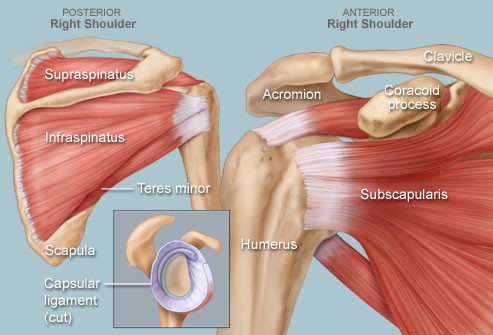
Shoulder impingement syndrome is a condition where the rotator cuff muscles and tendons become compressed or irritated during shoulder motion. This contributes to damage and injury to shoulder structures such as the tendons, ligaments, bursa and joint capsule. When this occurs these structures become inflammed and therefore cause pain and overall dysfunction of the shoulder girdle. While a traumatic injury can certainly cause shoulder impingement syndrome to develop it’s most commonly the result of a repetitive overhead type activity or exercise. Below you’ll find helpful information regarding additional causes, symptoms and treatment advice.
Causes Of Painful Arc Syndrome
Shoulder impingement syndrome is categorized as either:
- Primary (structural) causes
- Some people are born with a smaller sub-acromial fossa which increases the chances of suffering pain due to shoulder impingement.
- Conditions such as Osteoarthritis, Bursitis and other inflammatory type problems can also cause narrowing of the sub-acromial space.
- Secondary causes
- May be the result of shoulder joint instability as seen with cases of shoulder dislocation, repetitive overhead actions (i.e removing clothes from a clothes line, particular gym exercises or particular occupations).
Symptoms Of Subacromial Impingement
The hallmark signs & symptoms that you’re suffering from shoulder impingement syndrome include (but not limited too):
- Shoulder pain upon particular movement or ranges of motion.
- Difficulty lying on the effected shoulder.
- Pain or discomfort that may be localized to the shoulder, proximal neck and arm.
- Muscle weakness during specific arm exercises.
How Is Shoulder Impingement Diagnosed?
It’s essential for your treating practitioner to rule out potential differential diagnoses because this will influence the treatment which you receive. If you’re suffering any of the above signs and symptoms then we encourage you to consult for a thorough assessment. When you visit Vitality Chiropractic Australia we will discuss your complaint prior to commence an examination. During a shoulder regional examination you can expect:
- Palpation assessment to observe for specific tenderness, pain, swelling or skin changes.
- Analysis of your shoulder joint range of motion.
- Muscle strength testing to see if there is particular weakness or asymmetry.
- Orthopaedic and neurological assessment.
Shoulder Impingement Syndrome Treatment
Researchers have concluded that there are 7 stages that need to be covered to effectively rehabilitate injuries like shoulder impingement syndrome. Your Chiropractor or Physiotherapist are brilliant choices to assist you throughout your rehabilitation. While conservative management is recommended, other potential short term treatment options may include corticosteroid injections. These injections are useful to relieving pain that is due to inflammation. Phases of rehabilitation include:
- Protection, immediate pain relief and anti-inflammatory measures after injury onset.
- Assist with regaining complete shoulder joint movement and range of motion.
- Restore proper scapular control and scapulohumeral rhythm.
- Exam and treat cervicothoracic biomechanics if necessary.
- Progress rehabilitation towards rotator cuff strengthening based exercise.
- Initiate speed, power, propriception and agility rehabilitation.
- Return to usual activities of daily living.
Chiropractor Impingement Syndrome Research
- Individuals suffering from shoulder impingement syndrome who were treated with manual physical therapy (such as Chiropractic and Physiotherapy) combined with a specifically tailored exercise regime demonstrated clinically significant improvement in symptoms including increasing strength, decreasing pain and improving function earlier than with exercise alone. Senbursa, G. (2007). Comparison of conservative treatment with and without manual physical therapy for patients with shoulder impingement syndrome: a prospective, randomized clinical trial. Knee Surgery, Sports Traumatology, Arthroscopy, 15(7); 915 – 921
- Kinesiotape has been found to be more effective than other modalities during the initial stages of treatment. Kaya, E. (2010). Kinesiotaping compared to physical therapy modalities for the treatment of shoulder impingement syndrome. Clinical Rheumatology, 30(2); 201 – 207.
Additional Information
If you wish to continue your reading about Shoulder Impingement Syndrome and general shoulder pain please click here.