
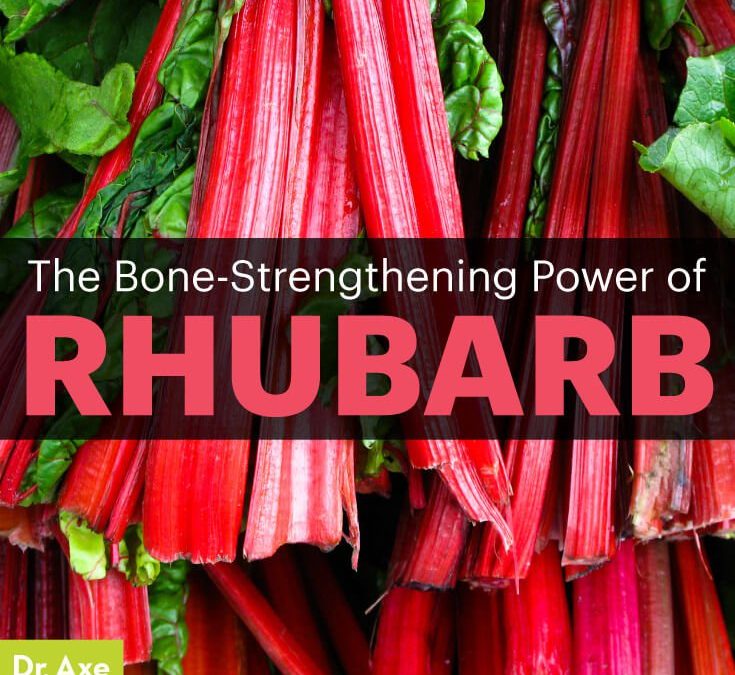
Fruit or vegetable? Admittedly I seriously struggle with this question. For the record, Google tells me that Rhubarb is a vegetable! Luckily we’re here to focus on much more important health information such as how it is so effective at creating stronger bones as it contains critical vitamins, minerals and phytonutrients. When we think of stronger bones we immediately think of Calcium, Vitamin-D and Magnesium. Now we’re going to add Rhubarb to the list as well as discussing it’s other health boosting benefits.
Achieve Stronger Bones & Prevent Osteoporosis With Rhubarb
Packed with high levels of Vitamin-K, it provides an important role in bone metabolism and protection against bone mineralization problems. Vitamin-K is important for blood clotting but it required for Osteonectic to occur which ensures calcium binds to bones. This process relies upon various cell types including Osteoclasts, Osteoblasts and Osteocytes. Nutritional research has demonstrated time and time again that individuals with adequate intake of Vitamin-K have positive bone mineral density and therefore reduced fracture risk. So for stronger and healthier bones start dusting off your Rhubarb recipe book!
Other Health Benefits
- Enhances digestive function
- Digestive function is largely dependent upon fiber. Nutritional studies have demonstrated that Rhubarb can assist with protecting the digestive wall while allowing normal contraction to occur. This can greatly assist people suffering abdominal discomfort, bloating, constipation and other digestive issues.
- Improves brain function
- Modern science is suggesting that the development of many chronic cortical issues such as Alzheimer’s and Amyotrophic lateral sclerosis may be partly due to free radical damage. Free radical damage can cause neuronal degradation.
- Potent anti-oxidant
- Rhubarb is considered a high-antioxidant food given it has high concentrations of Quercetin. Anti-oxidants help boost our immunity and general health.
- Relieves constipation and bowel problems
- As already discussed, Rhubarb can assist with bowel movements as well as easing the pain which may be associated with hemorrhoids.
- Reduces inflammation
- Chinese medicine has regarded Rhubarb highly since ancient times as they recognised it’s anti-infection properties.
Recent Comments