
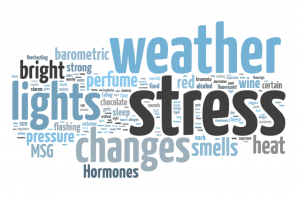
Sufferers will tell you of how debilitating and incapacitating the pain associated with migraines can be. Given migraines are somewhat poorly understood, it is important for sufferers to identify common migraine triggers so you may be able to reduce your headache frequency. While particular migraine triggers for one person may vary for another, it is largely accepted that there are numerous causes of migraines. Here we examine some of these as well as provide simple tips and information for you to combat your migraines appropriately.
Food
- Chocolate
- Food sources that contain high concentration of nitrate such as bacon, hot dogs and MSG
- Alcohol, particularly wed wine and beer
- Caffeinated beverages including coffee, tea and soft drinks
- Citrus fruits
- Nuts
- Fermented food
- Cheeses
Stress
One of the major migraine triggers is without doubt stress. Some circles of research suggest that migraine sufferers are considered to be highly emotional individuals and therefore demonstrate increased rates of anxiety, worry, shock, and sadness. These states cause a cascade of chemical releases in the brain that can lead to migraine development. Avoid over-stressful states by engaging in regular relaxation massage therapy sessions, meditation or explore potential options with a clinical psychologist.
Sleep
The complex nature of migraine triggers is demonstrated by sleeping patterns as too little or too much rest can prompt a powerful headache.
Smell
I’ll be the first person to put their hand up and say I do not enjoy walking through the perfume section of department stores. Within only a few minutes I will invariably notice a headache developing. Strong scents like perfume are a common migraine trigger for many people.
Exercise
Much like sleep, too little or too much exercise or physical exertion can stimulate a migraine. While exercise has many health benefits it is also a natural pain killer due to the release of various chemicals and hormones.
Menstruation
Many women suffer migraines during their menstrual cycle due to hormonal imbalance. Attacks typically occur one to four days prior to their period. A decline in oestrogen is considered to be the major culprit. As women near menopause and therefore fluctuating estrogen levels may also trigger an increase in migraines.
Occupational & Work Related
For those who spend hours behind a computer desk it’s highly likely that you experience headaches or migraines from time to time. Strategies to combat this include; regular rest breaks, stretching and working on your posture.
Food Additives
Some food products contain chemicals or additives which may also be implicated in a migraine attack such as monosodium glutamate, nitrates and aspartame.
Oral Contraception
As already discussed, hormones can have an impact on the development of migraines. Given this, women who use oral contraceptives may suffer migraines.
Recent Comments